Faculty
Rabia Ashraf 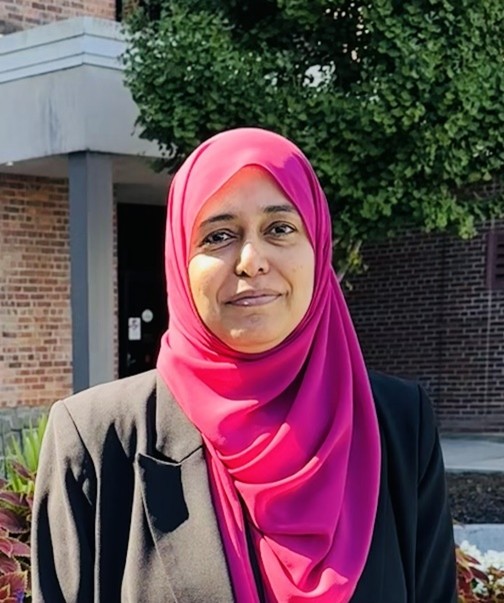
Visiting Assistant Professor of Biology
Office: BTCIS 270F
Phone: 518-580-8355
Email: rabiaashraf@skidmore.edu
Google Scholar: https://scholar.google.com/citations?user=6UPSaKoAAAAJ&hl=en&oi=ao
Education:
- Postdoctoral Research, Albany Medical College, Department of Regenerative and Cancer Cell Biology, 2022-2026
- PhD, Biomedical Sciences, Victoria University, Melbourne, Australia, 2016
- M. Phil., Microbiology, University of Karachi, Pakistan, 2007
- Postgraduate Diploma, Statistics, University of Karachi, Pakistan, 2006
- M.Sc. (Research), Microbiology, University of Karachi, Pakistan, 2002
Research interests:
My research focuses on mitochondrial calcium signaling and the mitochondrial calcium uniporter complex, a highly conserved protein complex that regulates calcium entry into mitochondria. Mitochondrial calcium is essential for coordinating energy production, cellular signaling, stress responses, and cell survival. Dysregulation of this process has been associated with aging, metabolic disorders, cancer, and neurodegenerative diseases.
Using the nematode Caenorhabditis elegans as an experimental model, I investigate how individual components of the mitochondrial calcium uniporter complex regulate mitochondrial calcium homeostasis, energy metabolism, mitochondrial structure and function, organismal behavior, stress resistance, and lifespan. My work combines genetic, molecular, imaging, physiological, and behavioral approaches to connect changes at the cellular level with whole-organism health.
I have also contributed to research examining how presenilin mutations disrupt iron homeostasis and promote ferroptosis-associated neurodegeneration. Collectively, my research interests lie at the intersection of mitochondrial biology, cellular stress responses, aging, and neurodegenerative disease.
Teaching interests:
My teaching interests include introductory biology, cell biology, microbiology, immunology, food microbiology, mitochondrial physiology, and biomedical science. I am particularly interested in helping students develop confidence in laboratory techniques, experimental design, quantitative analysis, scientific reasoning, and communication.
I strive to create an inclusive and engaging learning environment in which students feel comfortable asking questions, learning from unexpected results, and developing their identities as scientists. I also enjoy mentoring students and discussing research opportunities and educational and career pathways in the biological sciences.
Selected Publications:
Articles (Peer-reviewed)
- Ryan, K. C., Laboy, J. T., Ashraf, R., Ashkavand, Z., Jayasinghe, I., and Norman, K. R. (2025). Presenilin mutations disrupt iron homeostasis to promote ferroptosis-mediated neurodegeneration in Caenorhabditis elegans. Redox Biology, 88, 103910. DOI: 10.1016/j.redox.2025.103910
- Bogahawaththa, D., Ashraf, R., Chandrapala, J., Donkor, O., and Vasiljevic, T. (2018). In vitro immunogenicity of various native and thermally processed bovine milk proteins and their mixtures. Journal of Dairy Science, 101(10), 8726-8736. DOI: 10.3168/jds.2018-14488
- Ashraf, R.* and Smith, S. C. (2016). Commercial lactic acid bacteria and probiotic strains-tolerance to bile, pepsin, and antibiotics. International Food Research Journal, 23(2), 777-789.
- Ashraf, R.* and Smith, S. C. (2015). Selective enumeration of dairy-based strains of probiotic and lactic acid bacteria. International Food Research Journal, 22(6), 2576-2586.
- Ashraf, R., Vasiljevic, T., Day, S. L., Smith, S. C., and Donkor, O. N. (2014). Lactic acid bacteria and probiotic organisms induce different cytokine profiles and regulatory T-cell mechanisms. Journal of Functional Foods, 6, 395-409. DOI: 10.1016/j.jff.2013.11.006
- Ashraf, R.* and Shah, N. P. (2014). Immune system stimulation by probiotic microorganisms. Critical Reviews in Food Science and Nutrition, 54(7), 938-956. DOI: 10.1080/10408398.2011.619671
- Ashraf, R. and Shah, N. P. (2011). Antibiotic resistance of probiotic organisms and safety of probiotic dairy products. International Food Research Journal, 18(3), 837-853.
- Ashraf, R. and Shah, N. P. (2011). Selective and differential enumeration of Lactobacillus delbrueckii bulgaricus, Streptococcus thermophilus, Lactobacillus acidophilus, Lactobacillus casei, and Bifidobacterium spp. in yoghurt: A review. International Journal of Food Microbiology, 149(3), 194-208. DOI: 10.1016/j.ijfoodmicro.2011.07.008
- Ashraf, R.* and Ali, T. A. (2007). Effect of heavy metals on soil microbial community and mung bean seed germination. Pakistan Journal of Botany, 39(2), 629-636. *Corresponding or co-corresponding author.
Book Chapters:
- Ashraf, R. and Norman, K. R. (2025). The mitochondrial calcium uniporter complex: Identity and role in human diseases and inflammation. In Y.-X. Wang (Ed.), Inflammation: From Chemical Mediators and Pathology to Practice and Treatment. Springer Nature. DOI: 10.1007/978-3-031-55254-0_4-1
- Ashraf, R. and Shah, N. P. (2011). Selective media for enumeration of lactic acid and probiotic organisms in dairy foods. In N. P. Shah, A. G. Cruz, and J. A. F. Faria (Eds.), Probiotic and Prebiotic Foods: Technology, Stability and Benefits to Human Health (pp. 77-111). Nova Science Publishers.